
This was a short, energetic five-day trip through Italy: one night in Milan, three nights in Venice, and a surprise dash to Rome on the last morning before we flew out of Fiumicino. On the afternoon of day 2 we took the high-speed train from Milano Centrale to Venezia Santa Lucia, and we deliberately kept more time for Venice, which simply has even more to see. Milan has plenty we could have added, but on a trip this short we were happy with that choice.
It was not our first time in Rome, or at the Fontana di Trevi, but we were travelling with family who had never seen it. That last-day detour was a little crazy, and one of the most exciting surprises of the trip.
This post contains affiliate links; we may earn a small commission at no extra cost to you.

Our 5-Day Route at a Glance
- Day 1, Milan (1 night): stay near Milano Centrale, climb the Duomo rooftop by the stairs, see the archaeological area under the cathedral, walk through the Galleria Vittorio Emanuele II, ride a historic tram back and stop for gelato at Terra Gelato on Via Vitruvio.
- Day 2, Milan to Venice: Castello Sforzesco, then walk Via Dante to Piazza del Duomo with a stop at the Starbucks Reserve Roastery. Leave the luggage near the station, have lunch, and take an afternoon high-speed train to Venezia Santa Lucia (about 2 hours 30 minutes).
- Day 3, Venice: wander and get lost, visit the Basilica di San Marco and Piazza San Marco, have lunch at Rossopomodoro, go up the Campanile, then take a gondola ride.
- Day 4, Murano and Burano: vaporetto to Murano for a glass-blowing demonstration, then on to colourful Burano. Return via San Zaccaria to see Piazza San Marco, Palazzo Dandolo and the Bridge of Sighs at night.
- Day 5, Venice to Rome and the airport: morning high-speed train to Roma Termini (about 4 hours), a quick visit to the Fontana di Trevi, then the Leonardo Express to Fiumicino.
Day 1: Milan, the Duomo and a Walk Through the Galleria (1 Night)
We stayed close to Milano Centrale, which made the first and last hours in the city very easy. If you are flying in, a pre-booked airport transfer with Welcome Pickups is a calm way to reach the hotel, especially with luggage after a journey.
Climbing the Duomo di Milano by the Stairs
The first thing we did was go up to the rooftop of the Duomo di Milano, with a ticket we had pre-booked online for access by the stairs rather than the lift. It is a proper workout, and it was completely worth it. Walking among the spires and statues, with the city spread out below, is the best way to understand how extraordinary this cathedral is.
As of 2026, the official terraces-by-stairs ticket is €16 (reduced €8), or you can buy a combined Duomo and terraces-by-stairs ticket for €22 (reduced €11). Book ahead in busy periods, either on the official Duomo site or through Tiqets. There are no visitor toilets on the rooftops, and modest dress is required inside the cathedral itself.

We also went down into the archaeological area under the cathedral. Beneath the nave are the remains of the early Christian baptistery of San Giovanni alle Fonti, with its octagonal plan and baptismal font, along with traces of earlier churches on the same site. It is a quieter, older layer of Milan, and a nice contrast after the brightness of the roof. The archaeological area is usually a separate ticket from the terraces; the official Culture Pass covers the cathedral, the museum and the archaeological area, but not the rooftop.
Galleria Vittorio Emanuele II, a Historic Tram and Gelato
From the cathedral it is only a few steps into the Galleria Vittorio Emanuele II, Milan’s grand 19th-century shopping arcade, with its glass dome, mosaic floors and the famous bull on the pavement that visitors still like to spin on. Even if you are not there to shop, it is worth walking through slowly and looking up.

To get back towards our hotel near Centrale, we took one of Milan’s traditional trams. The historic orange and cream cars, the ATM Class 1500 or “Ventotto”, still run on regular lines, including line 1, which is a useful link between the Duomo area around Cordusio and the streets near the station. It is ordinary public transport, and it is also one of the most enjoyable short rides in the city.

We finished the evening with a fantastic gelato at Terra Gelato, at Via Vitruvio 38, just a short walk from Milano Centrale. After a day of stairs, churches and trams, it was exactly what we wanted.
Day 2: Castello Sforzesco, a Last Look at the Duomo, and the Train to Venice
The next morning we started at Castello Sforzesco, the brick Sforza castle at the edge of the Sempione park, with its tall Filarete Tower over the main gate. You can wander the courtyards without a ticket; the museums inside are optional if you have the time. From there we walked along Via Dante, the pedestrian street that runs straight from the castle to Piazza del Duomo, for one last photograph of the cathedral.

A Stop at the Starbucks Reserve Roastery
Halfway along that walk, at Piazza Cordusio, we stopped at the Starbucks Reserve Roastery. It is not an ordinary Starbucks, and it is worth stepping inside even if you usually walk past the chain. The Roastery occupies the former Palazzo delle Poste, Milan’s old central post office, and the building alone is impressive. Inside, coffee is roasted on site, there is a Princi bakery for bread, pastries and pizza, and the Arriviamo Bar serves coffee cocktails and aperitivo-style drinks you will not find in a standard store. It opened in 2018 as Starbucks’ first Reserve Roastery in Italy, and it feels more like a food hall in a historic palazzo than a café.

Milan has much more to see — The Last Supper, the Navigli canals, Brera — but Venice has even more, and on a five-day trip we were glad we kept the extra days for the lagoon.
Luggage, Lunch and the Afternoon Train
Because our train was in the afternoon, we had to check out of the hotel first. The practical tip is a simple one: find a good place to leave your bags near the station so you can keep enjoying the morning. We recommend Radical Storage, which has luggage storage points around Milano Centrale. It makes a huge difference not to drag suitcases to the castle and back.
For lunch near the station we liked Caffè Panzera dal 1931, at Piazza Duca d’Aosta 10, right beside Milano Centrale. It is a historic café, and we enjoyed it, even though its Google reviews sit below 4 stars. If you want an alternative to pasta, the station itself has plenty of options. We also liked Roadhouse Restaurant Milano Centrale (now also presented as Roadhouse Meatery), again despite reviews that sit below 4 stars. Sometimes a convenient, filling meal before a train is exactly what you need.
From Milano Centrale, both Trenitalia Frecciarossa and Italo high-speed trains run to Venezia Santa Lucia in about 2 hours 25 to 30 minutes. Book on the Trenitalia or Italo websites, and make sure your ticket is for Venezia Santa Lucia, the station on the island, unless you have chosen to stay in Mestre. Advance fares are usually much better than tickets bought on the day.

Where to Stay in Venice
In Venice we stayed near the Santa Lucia train station, which was very practical with luggage: you step off the train and you are already in the city, with vaporetti and restaurants close by. If you would rather spend less on accommodation, consider Mestre, on the mainland. It is close, generally more budget-friendly, and there are frequent regional trains and buses into Venice. The train from Venezia Mestre to Santa Lucia takes around 10 minutes. If you buy an ACTV Venezia Daily Pass, it also covers those regional Trenitalia trains inside the municipality.
Day 3: Getting Lost in Venice, San Marco and a Gondola
Day 3 was for wandering. The best advice we can give you in Venice is to get a little lost, which is almost too easy: a narrow calle turns, a bridge appears, and suddenly you are in a quiet square you did not plan to find. After that, we made our way to the main wonders: the Basilica di San Marco and Piazza San Marco.
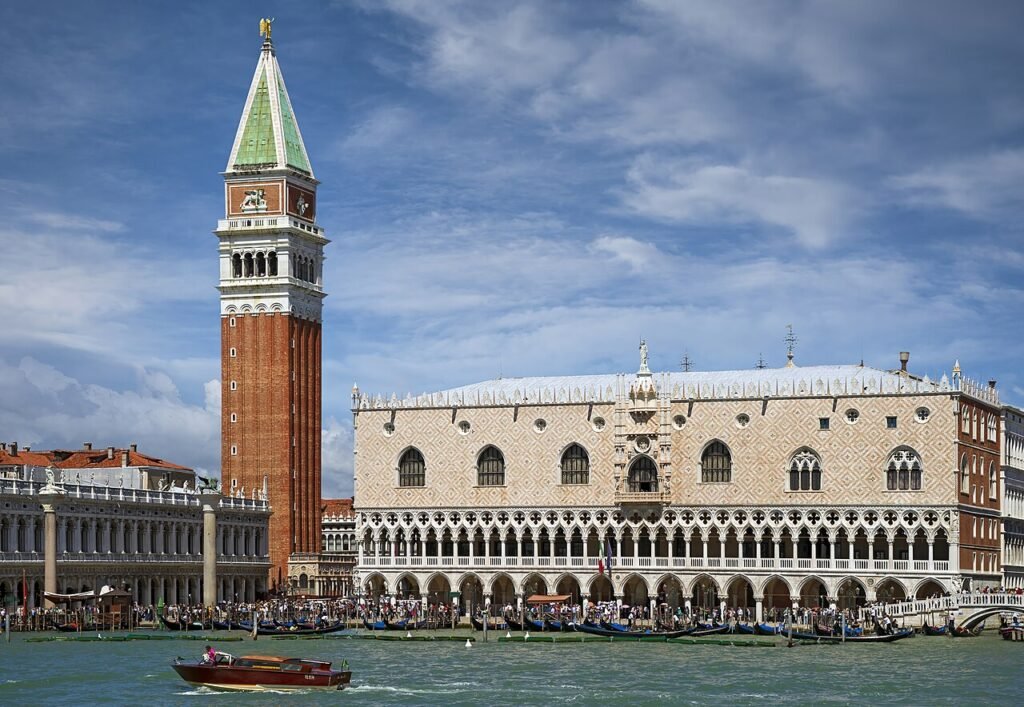
We skipped the Palazzo Ducale (the Doge’s Palace) this time, but if you have the time it is beautiful inside, with the state rooms, the prisons and the crossing of the Bridge of Sighs. In high season it is worth booking ahead, for example through Tiqets.
We went up the Campanile di San Marco in the afternoon, after lunch at Rossopomodoro Venezia San Marco, on Calle Larga San Marco. It is a well-known Neapolitan pizza chain, and the prices were good for such a central location. The Campanile has a lift, unlike the Duomo in Milan, and the view over the square, the lagoon and the red rooftops is wonderful. As of 2026, the standard visitor ticket is around €15; check the official basilica ticket site, or book through Tiqets, as prices and time slots can change.
Why You Cannot Sit in the Piazzetta dei Leoncini
One thing felt strange at the time: workers for the Comune di Venezia were stopping people from sitting in the Piazzetta dei Leoncini, the small square beside the basilica with the two marble lions. It seemed odd if you only wanted to rest for a minute, but it is the rule. Venice’s Enjoy Respect Venezia campaign, and the city’s urban police regulations, ban sitting or picnicking on the ground, steps and monuments in and around Piazza San Marco, including the Piazzetta dei Leoncini. Stewards do enforce it, and fines can apply — often around €100, and more if you are eating or drinking while sitting. If you need to sit down, a café table is the safe option.
A Gondola Ride, and Two Cheaper Ways to Enjoy One
After that we took a gondola ride. It is expensive, but we felt we had to do it once, and we were glad we did. The official fare set by the Comune di Venezia (in force since November 2023, and still the reference in 2026) is €90 per gondola, not per person, for a 30-minute daytime ride until 19:00, and €110 for a 35-minute ride after 19:00, for up to five passengers. A full boat works out much more reasonably than a couple paying the whole fare themselves. Agree the official price and duration before you board; musicians, special routes and extra time are not included. Some tour websites charge more than the municipal tariff, so it is worth checking the sign at the official stazio (gondola stand).

If you would like the photograph without the full fare, go to Libreria Acqua Alta, the famous bookshop in the Castello district, near Santa Maria Formosa. The shop keeps piles of books in a real gondola, and in bathtubs, to protect them from acqua alta, the high water that floods Venice. In the courtyard there is also a staircase built out of books, with a view over a canal — a very popular, and free, place for a photo with a gondola. It is a working bookshop and can get extremely crowded, so go early if you can and be considerate of people trying to browse.
There is also a genuinely cheap public gondola. The traghetto is a gondola ferry, rowed by two gondoliers, that simply crosses the Grand Canal from one bank to the other. It is not a scenic tour, and the ride lasts only a couple of minutes, but you are standing (or sitting) in a real gondola for a fraction of the price. As of 2026 the fare is €2 for non-residents and €0.70 for residents or IMOB card holders, paid in cash to the gondolier. A vaporetto pass does not cover it. The crossings that usually operate are Santa Sofia, San Tomà, Santa Maria del Giglio and Dogana, plus Carbon on weekday mornings; hours change with the season, and some stations close entirely, so check the sign at the landing. Venetians often stand for the crossing.
Day 4: Murano, Burano and Venice After Dark
The next day we left the historic centre for the islands. First came Murano, and a demonstration of how Murano glass is made. Watching a maestro gather molten glass from the furnace and shape it in a few practised movements is fascinating, even if you have seen videos beforehand. Some demonstrations are attached to shops, and there is no obligation to buy. If you prefer to book a visit in advance, Tiqets sometimes lists Murano glass experiences alongside the main Venice tickets.

From Murano we continued to Burano, a small, colourful island of fishermen’s houses painted in bright yellows, reds, blues and greens, with a leaning campanile and quiet canals. It is compact and very beautiful, and it is easy to spend a relaxed couple of hours simply walking and taking photographs.

A note on history, because it is easy to assume that a place this photogenic must be where Venice began. The early story of the lagoon is a little more complicated. From the fifth and sixth centuries, people from mainland Roman towns such as Altino took refuge on the islands as invasions reached the Veneto. Nearby Torcello, just across the water from Burano, became an important early religious and civic centre; its cathedral of Santa Maria Assunta dates back to the seventh century. Burano grew as a fishing community beside it. The Venice we recognise today later took shape around the Rialto. We did not visit Torcello on this trip, but if you have extra time and love history, it is a calm, greener island just a short vaporetto ride from Burano, and an easy one to add to the same day.
Getting Around by Vaporetto
The boats are called vaporetti, and they are the affordable way to travel around Venice and the islands. ACTV runs them. As of 2026, a standard single Rete Unica ticket costs €9.50 and is valid for 75 minutes, including changes. A Venezia Daily Pass is €25 for 24 hours from the first validation, then €35 for 48 hours, €45 for 72 hours and €65 for seven days. If you are going to Murano and Burano, a day pass or a 48-hour ticket usually works out cheaper than single tickets. The island boats typically leave from Fondamente Nove (line 12 is the usual route towards Murano, Burano and Torcello), but always check the current ACTV timetable. Tickets must be validated as you board.
Our returning vaporetto stopped at S. Marco-San Zaccaria, which gave us a chance to see Piazza San Marco at night. From the waterfront we also saw Palazzo Dandolo, the 14th-century palace that is now the Hotel Danieli, on Riva degli Schiavoni, and the Bridge of Sighs (Ponte dei Sospiri). The name comes from the idea that prisoners, crossing the enclosed limestone bridge from the Doge’s Palace to the New Prisons, sighed at a last glimpse of Venice through its small windows. The English name was popularised by Lord Byron in the nineteenth century. At night, with the stones lit and the canal quiet, it is one of the most atmospheric corners of the city.

Day 5: A Surprise Dash to the Trevi Fountain, Then Home
The last day was crazy, in the best way. We took a morning high-speed train from Venezia Santa Lucia to Roma Termini — about four hours on Frecciarossa, with some services just under four hours — grabbed something to eat, and went straight to the Fontana di Trevi for a photograph and a gelato. Then we went back to Termini and caught the Leonardo Express to Fiumicino airport.
If you have an early departure from Venice, you can leave your bags with Radical Storage near Santa Lucia and travel light. The same is useful in Rome: drop the luggage near Roma Termini, see the fountain, and pick it up again before the airport train. The Leonardo Express is Trenitalia’s non-stop service from Roma Termini to Fiumicino, taking 32 minutes and costing €14 one way, with frequent departures. If you would rather not deal with the station with heavy bags, a Welcome Pickups transfer to the airport is the easier option.

The tradition is to toss a coin into the fountain with your right hand over your left shoulder, to make sure you return to Rome. The coins are collected and given to charity. One important change if you are travelling now: from 2 February 2026, non-residents pay a €2 ticket to enter the inner monumental area closest to the basin, generally from 9:00 to 22:00 (on some weekdays the paid entrance starts later). The fountain is still visible for free from the surrounding piazza, and after 22:00 it remains visible without a ticket. Residents of Rome and the Metropolitan City, children under 6 and some other categories go in free. Tickets are sold on the official site, fontanaditrevi.roma.it, and at the entrance (card only on site). If you only have time for a photo from the piazza, you may not need a ticket; to get close and toss a coin during the day, you do. Hours can change for maintenance, so check the official site before you go.
It was not our first time in Rome, or our first time at the Fontana di Trevi, but we were travelling with family who had never seen it, and we truly recommend the detour. The fountain is really beautiful, and ending a Milan-and-Venice trip with that unexpected hour in Rome was a crazy, exciting surprise.
Practical Tips for Milan, Venice and a Quick Stop in Rome
Getting There and Around by Train
- Milano Centrale to Venezia Santa Lucia takes about 2 hours 25 to 30 minutes on Frecciarossa (Trenitalia) or Italo.
- Venezia Santa Lucia to Roma Termini takes about 4 hours on Frecciarossa, sometimes just under that.
- Book in advance on Trenitalia or Italo for the best fares, and double-check that you have Santa Lucia for Venice, not Mestre, unless you are staying on the mainland.
- The Leonardo Express from Roma Termini to Fiumicino takes 32 minutes and costs €14. Trains are frequent and non-stop; Metrebus city tickets are not valid on this service.
- For airport transfers in Milan or Rome, a pre-booked option such as Welcome Pickups is useful if you have a lot of luggage or a tight connection.
Vaporetti in Venice
- As of 2026, a single ACTV ticket is €9.50 for 75 minutes; a 24-hour pass is €25, 48 hours €35, 72 hours €45 and 7 days €65, from the first validation.
- A day pass usually pays off as soon as you visit Murano and Burano, or make several trips in the historic city.
- Validate your ticket each time you board. Airport buses and Alilaguna boats are not included in the standard pass.
- The official traghetto gondola crossings of the Grand Canal are a separate €2 cash fare and are not covered by the vaporetto pass.
Where to Stay
- Milan: staying near Milano Centrale is very practical on a short trip, with trams to the centre and an easy start for the Venice train.
- Venice: we stayed near Santa Lucia, which is ideal if you arrive and leave by train with luggage.
- For a more budget-friendly base, Mestre is close, with frequent trains and buses to Venice.
What to Book Ahead
- High-speed train tickets, especially in peak season and on Friday afternoons.
- Duomo di Milano rooftop tickets (stairs or lift), for example with Tiqets or on the official site.
- St Mark’s Campanile, and the Doge’s Palace if you want to go inside, for example with Tiqets.
- Luggage storage on check-out days, for example with Radical Storage, particularly near Milano Centrale, Venezia Santa Lucia or Roma Termini.
- Airport transfers, for example with Welcome Pickups.
A Note on Budget
- The official gondola is the main splurge (€90 per boat by day). Share it if you can, or try a €2 traghetto crossing and a photo at Libreria Acqua Alta instead.
- Vaporetti look expensive as single tickets, but a day pass is reasonable for the islands.
- Meals can stay affordable even in central Venice: a pizza at a chain like Rossopomodoro, or a simple lunch near Milano Centrale, will not break the trip.
- The new €2 Trevi ticket is a small extra if you want to walk down to the basin.
Five days is not long, and we moved quickly, but the combination worked: a first taste of Milan, a proper look at Venice and its islands, and a last-minute hour in Rome that none of us will forget. If you are planning a similar route, book the trains and the rooftop tickets first, leave the bags at the station when you need to, and keep a little space in the plan for getting lost.