
Greece is more than a summer postcard. It is morning light on the Acropolis, a mountain monastery rising above the clouds, a village bakery still warm from its first batch of pies, and a long lunch that somehow becomes dinner. Come for the blue sea, but leave room for the mainland: ancient sanctuaries, lively cities and olive-covered peninsulas are just as rewarding as the islands.
Whether you are planning a first island-hopping trip or a slower journey through history and regional food, this Greece travel guide is your starting point. Explore the country below, then use our destination guides to turn the ideas into an itinerary.


Greece at a Glance
- Capital: Athens.
- Language: Greek; English is widely used in major visitor areas, but not everywhere.
- Currency: euro (€).
- Choose your pace: combine a city with one island group, or devote a trip to a mainland region rather than trying to see everything.
- First-trip idea: Athens for history, followed by a few days in the Cyclades. For an alternative, explore the Peloponnese or make Crete your main destination.
Where to Go in Greece
Athens: Ancient Landmarks and Modern City Life
Start with the Acropolis and its best-known temple, the Parthenon, then give the Acropolis Museum time of its own. Below the hill, Plaka offers lanes made for wandering, while the wider city rewards curiosity with food markets, contemporary culture and neighbourhood cafés. Visit exposed archaeological sites early in hot weather, carry water and check ticket arrangements before you go.
Santorini and Mykonos: The Classic Cyclades Pair
Santorini brings the volcanic caldera, Fira’s cliff-top walks and Oia’s blue domes. Mykonos pairs the windmills of Kato Mili with Little Venice, whitewashed Chora and south-coast beaches. Both are beautiful and popular: plan ahead, expect crowds at famous photo spots, and leave room in the budget for their higher prices. Our five-day Santorini and Mykonos itinerary connects them by ferry.
Crete: An Island That Deserves Its Own Trip
Greece’s largest island combines Minoan history at Knossos, the museums of Heraklion, the old towns of Chania and Rethymno, mountain villages and beaches. Distances are bigger than the map may suggest: choose a base or a manageable region rather than trying to cross the whole island every day. Food is part of the journey, from local cheeses and olive oil to simple seasonal dishes.
Meteora and Delphi: Mainland Wonders
At Meteora, historic Orthodox monasteries stand on extraordinary rock pillars above Kalampaka. These are working religious communities, not just viewpoints: check each monastery’s opening days and dress code. Delphi offers a different kind of pilgrimage, through the ancient sanctuary associated with Apollo’s oracle, with mountain scenery and a museum that add depth to the visit.
The Peloponnese: Ruins, Castles and Coastal Towns
Head into the Peloponnese for ancient Olympia, the theatre and sanctuary at Epidaurus, and the Byzantine ruins of Mystras. Balance the history with Nafplio’s old town, the stone villages of Mani or the fortified setting of Monemvasia. A road trip can work well here, but avoid packing too many distant stops into each day.
Corfu and the Ionian Islands: A Greener Side of Greece
West of the mainland, the Ionian Islands have a different feel from the dry Cyclades. Corfu pairs olive groves and coastal scenery with a historic town shaped by Venetian influence. Kefalonia and Lefkada offer more ideas for a beach-focused journey. Think of the Ionian as a separate route, rather than assuming easy direct ferry links to Santorini or Mykonos.
Thessaloniki: Waterfront Walks and Layers of History
Greece’s second-largest city is a rewarding northern base, with Byzantine monuments, the White Tower, lively markets and long waterfront walks. Its food reflects a rich mix of regional and cultural influences. Start with a bakery breakfast, explore the Upper Town and save your evening for a leisurely meal.
Explore Greece: Destinations & Guides
Choose a guide below to start planning the details. More destinations will be added here as the collection grows.


Santorini & Mykonos
Five days of caldera views, island ferries, whitewashed lanes and beach time.
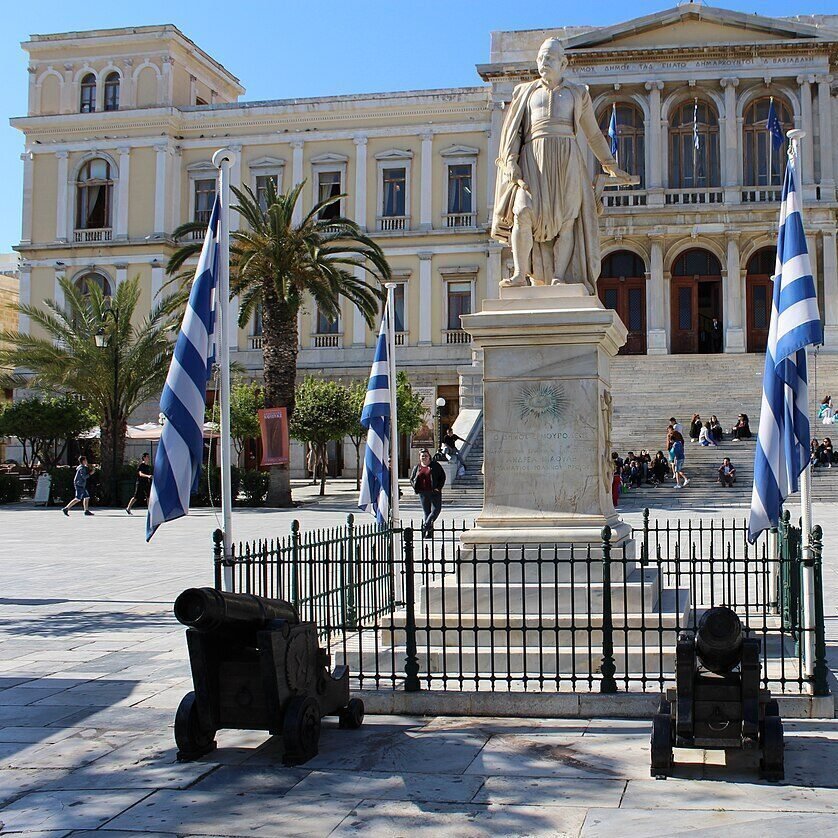
Santorini, Naxos, Syros & Athens
Ten days ride across the Cyclades and the Greek capital
Coming soon
More Greece destination guides are on the way.
What to Eat and Drink in Greece
The most memorable meals are often straightforward: seasonal vegetables, olive oil, bread, local cheese and a few plates to share. Greek cooking changes from region to region, so ask what is local rather than ordering the same dish everywhere.
- Souvlaki and gyros: grilled meat skewers and meat shaved from a rotating spit, often served in pita. Names and serving styles vary by region.
- Moussaka: a baked dish commonly layering aubergine, minced meat and béchamel, often with potato.
- Horiatiki: the village salad of tomato, cucumber, onion, olives and feta, dressed with olive oil and oregano.
- Spanakopita: spinach pie, often with feta, wrapped in pastry; a useful bakery stop between sightseeing.
- Loukoumades: small fried dough treats, traditionally served with honey or syrup.
- Ouzo: an anise-flavoured spirit usually enjoyed slowly with small plates of food. Drink responsibly.
Regional Flavours Worth Seeking Out
- Crete: dakos, a barley-rusk salad topped with tomato, cheese and olive oil.
- Corfu: pastitsada, commonly rooster or beef in a spiced red sauce with pasta; sofrito is another local speciality.
- Thessaloniki: bougatsa, a flaky pastry with sweet or savoury fillings, and koulouri sesame bread rings.
- The Aegean: local cheeses, pulses, seafood and vegetable dishes show how much there is beyond grilled meat.
Tell staff about allergies explicitly. A meat-free-looking dish can still contain cheese, egg, butter or stock; fasting dishes may offer useful options, but ask about ingredients rather than assuming they are vegan.
Culture, Traditions and Everyday Etiquette
A Country With Many Layers of History
Ancient Greek city-states left influential traditions in philosophy, theatre, art and politics. Later Roman, Byzantine, Ottoman and, in some places, Venetian periods added further layers. Greece is a living modern country as well as an archaeological destination: allow time for ordinary neighbourhoods and contemporary culture, not only monuments.
Orthodox Traditions and Easter
Greek Orthodox traditions remain important in many communities. Easter is a major celebration, with Good Friday processions and candlelit Resurrection services around midnight on Holy Saturday. Its date changes each year and does not always match Western Easter. Local customs differ, so check events and opening hours in the place you are visiting; holiday travel can be busy.
Church and monastery visits call for modest clothing and quiet behaviour. Follow posted rules, ask before photographing worshippers and do not interrupt a service. Village festivals, or panigyria, can bring music, food and celebrations around a patron saint’s feast day; dates and customs are local.
Afternoon Rest, Late Dinners and Respectful Travel
Some smaller shops close for an afternoon break, although tourist businesses may keep different hours. Respect residential quiet hours rather than assuming every street is a holiday zone. Dinner often starts later than in northern Europe, and sharing several dishes is common. There is no need to rush a meal—or expect every restaurant to follow exactly the same rhythm.
- Greet people when entering a small shop or café; a little courtesy goes a long way.
- Ask before photographing someone, particularly during religious events.
- Keep beachwear for the beach and cover up in towns and religious places.
- Stay off private rooftops and terraces, even if they appear in popular travel photos.
A Few Useful Greek Words
- Yassas (γεια σας): a polite hello or goodbye.
- Efcharistó (ευχαριστώ): thank you.
- Kaliméra (καλημέρα): good morning.
- Parakaló (παρακαλώ): please or you’re welcome.
Practical Information for Planning Your Trip
When to Visit
Late spring and early autumn are good all-round choices for sightseeing and island travel. May and June bring long days; September often combines warm seas with fewer peak-summer crowds. Swimming conditions vary, and spring water can still feel cool. July and August are hot, busy and often more expensive, especially on famous islands.
Winter can suit city breaks and mainland exploration, but many island hotels and seasonal businesses close and ferry options shrink. Mountain areas have a very different climate from the coast. Check the conditions for your actual destination, not just “Greece weather”.
Getting Around: Ferries, Flights and the Mainland
- Ferries: plan within island groups where possible. Routes and frequencies change by season, and not every pair of islands has a direct connection. Check the departure port carefully.
- Domestic flights: useful for longer island distances or returning to Athens; compare the full journey, including airport transfers and baggage allowances.
- Mainland transport: intercity KTEL buses connect many towns. A car can help for dispersed rural stops, but is not essential for every itinerary.
- Leave a buffer: strong winds, including the summer meltemi in the Aegean, can affect crossings. Avoid a tight ferry-to-international-flight connection.
Money and Budget
Greece uses the euro. Carry a card and some cash for smaller purchases and places where card facilities are unavailable. Check ATM and exchange charges, and compare prices in euros rather than accepting an unfamiliar conversion automatically.
Your budget depends heavily on season, island and accommodation. Mykonos and Santorini’s view-led hotels and beach clubs can be expensive; mainland bases, less-famous islands, bakery meals and public transport can make a trip much more affordable. Compare the total cost, including ferries, transfers, luggage, attraction tickets and any accommodation-related charges, rather than choosing on room price alone.
- Book busy-season accommodation and essential ferry or flight legs early.
- For major sights, check official opening times, ticket rules and heat-related notices before travelling.
- Bring sun protection, water and comfortable shoes for uneven stone paths.
- Use travel insurance appropriate to your plans, and check current entry requirements for your nationality.
Planning Sources
For current travel details, consult Visit Greece. The country’s official tourism website also covers Greek food and Easter traditions. For local customs, see the Official Athens Guide. Timetables, prices and opening hours should always be checked for your travel dates.